Key Takeaways
- Water reaches the framing when grout, caulk or the waterproofing layer behind the tile fails, and the leak can run a little at a time for a long while before anything shows.
- Damage found at demolition falls into three levels: surface mold, soft or rotted subfloor, and rotted framing.
- The EPA says "the key to mold control is moisture control," so the repair has to remove the moldy material and stop the water.
- With Bulldog, mold and mildew remediation, subfloor repair and new plumbing components are priced up front in walk-in shower and full bathroom work.
When we find water damage behind an old shower, the repair runs in a fixed order: stop the source, remove what is ruined, treat mold, replace soft subfloor and repair rotted framing, then rebuild over a continuous waterproofing layer. Older homes around Cincinnati often hide a spongy subfloor by the toilet, mold behind a tub surround or worn-out supply lines. In a Bulldog walk-in shower or full bathroom remodel, subfloor repair, mold remediation and new plumbing components are built into the price before work starts. Finding them does not turn into a change order.
Why water gets behind old shower tile
Tile and grout are a finish, and water works through both over time. The layer behind them is what keeps the walls and floor dry. In an old shower, that layer has often worn out, cracked or never ran continuously in the first place.
A shower pan liner is the waterproof layer under a site-built tile shower floor. The Ohio Plumbing Code says: "Floors under shower compartments, except where prefabricated receptors have been provided, shall be lined and made watertight." The liner must "turn up on all sides not less than 2 inches (51 mm) above the finished threshold level" (Ohio Plumbing Code, Section 421.5.2, via UpCodes). When a liner fails or stops short, water that soaks through the grout runs into the framing instead of the drain.
Cracked caulk at the tub rim, a loose drain connection or a leaking supply line inside the wall can do the same. Our guide to how shower waterproofing works covers the layers in detail and the signs that they have failed.
Signs of hidden damage, by where you see them
You can often spot trouble before demolition. Check three places:
- The floor: soft or spongy spots next to the tub or in front of the toilet.
- The shower walls and the wall outside them: tile that sounds hollow low on the wall, grout that cracks in the same spot again, and peeling paint or bubbling drywall.
- The room below: stains on the ceiling under the bathroom.
A musty smell that returns after cleaning counts too. The EPA says "you may suspect hidden mold if a building smells moldy," and lists hiding places such as "the back side of dry wall, wallpaper, or paneling" and "areas inside walls around pipes (with leaking or condensing pipes)" (EPA, A Brief Guide to Mold, Moisture and Your Home).
Water damage found during a shower remodel: what it looks like
Demolition gives the first look behind the tile in years, sometimes decades. What turns up falls into three levels.
| What we find | What it looks like | What happens next |
|---|---|---|
| Surface mold and mildew | Dark staining on the back of the wall board or the face of the studs | Treated and removed before the walls close |
| Soft or rotted subfloor | Dark, spongy or crumbling wood around the drain, the tub or the toilet | Damaged sections cut out and replaced |
| Rotted framing | Soft studs or a rotted plate at the bottom of the wall | Repaired before the new shower goes in |
Subfloor is the plywood or plank layer over the floor joists that the tile and shower base sit on. Wood soaks up a slow leak, so the subfloor near a drain or toilet can hold damage that the wall above does not show.
A careful tear-out follows the water. If the stain runs past the first cut, the opening grows until the wood on every side is sound. Nobody can say how far that goes until the wall is open.
How we repair it
1. Photograph the damage, then remove the source
Take photos of the stains, the soft floor and anything wet before the old shower comes out. If you plan to talk to your insurance agent, those pictures show what was there.
Our crew then removes the old tub or shower base, the surround and the wall material behind it, and hauls it all away. Every walk-in shower we build gets new supply lines, a new drain and a new P-trap, so the plumbing starts fresh.
2. Treat mold and mildew
We treat what is behind the walls before we close them up, and we never patch over it or hide it. The EPA puts it plainly: "Do not paint or caulk moldy surfaces," and "Fix plumbing leaks and other water problems as soon as possible" (EPA). Porous materials "may have to be thrown away if they become moldy," according to the same guide.
Size changes the approach. The EPA says a homeowner can usually handle a moldy area "less than about 10 square feet," and advises that if you hire help, "make sure the contractor has experience cleaning up mold" (EPA, Mold Cleanup in Your Home). Its guide for schools and commercial buildings recommends limited containment for 10 to 100 square feet and full containment above 100 square feet (EPA, Mold Remediation in Schools and Commercial Buildings, ch. 3). That guide is written for larger buildings, but it shows how cleanup scales with area.
3. Replace the rotted subfloor under the shower
Soft or rotted subfloor gets cut out and replaced. Tile lasts only as long as what sits under it, so no new base or floor goes down on wood that flexes.
4. Repair rotted framing
When rot reaches the studs or the bottom plate, those pieces get repaired before anything new goes in. Framing damage is the hardest to predict from the outside, so its extent shows only once the walls are open.
5. Rebuild with continuous waterproofing
The new shower is waterproofed from the floor up rather than just above the old tub rim. Our acrylic showers use Triple-Lock Seam backerboard and a Triple-Lock Seam acrylic surround. Our tile showers use a Schluter KERDI waterproofing system that is water-tested before tile goes on. The waterproofing guide linked above explains each system.
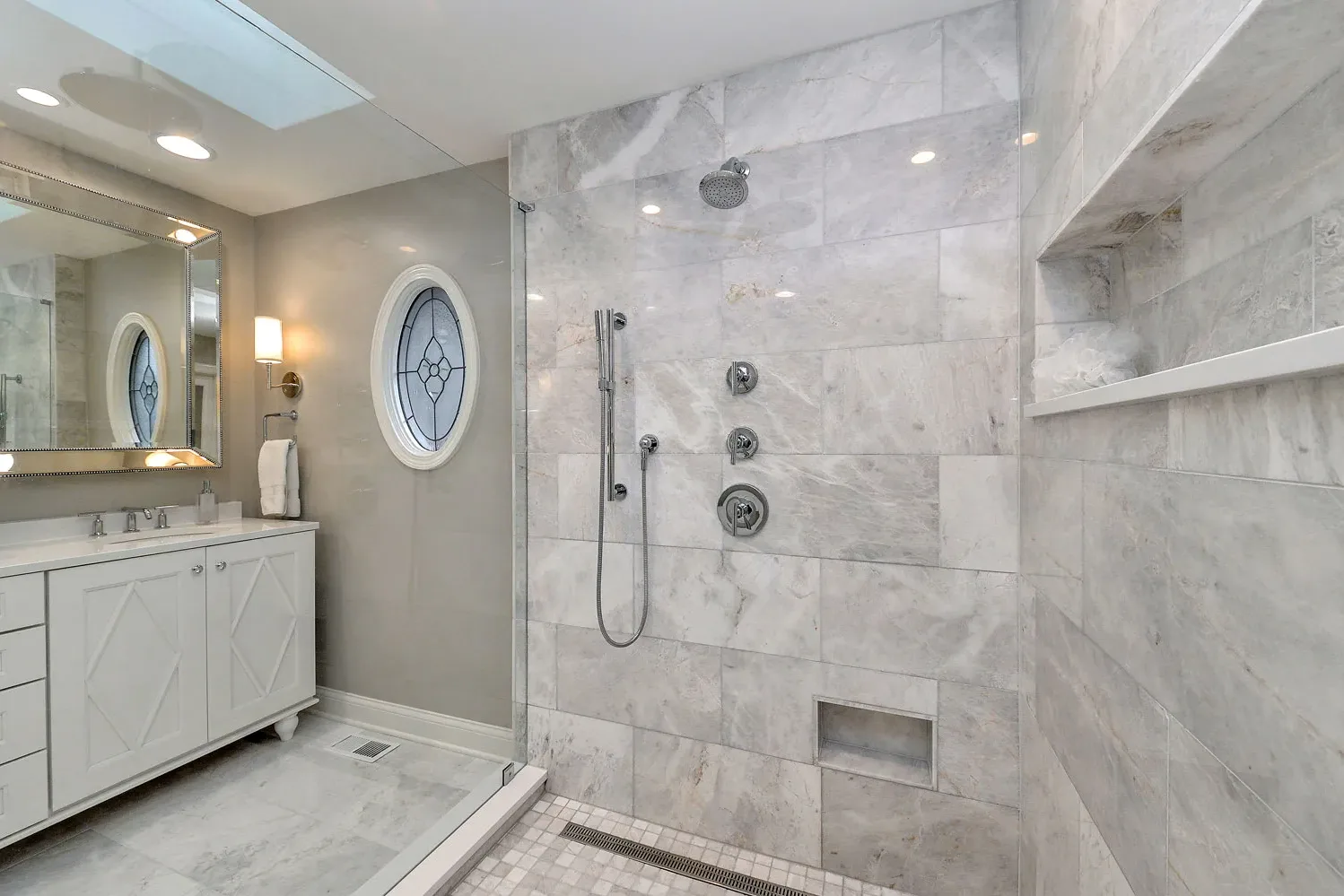
The gray marble shower at the top of this page comes from our Glam + Elegance master bath remodel, with frameless glass, a rain head, body sprays and a linear drain.
Who pays for hidden damage, and how long the work takes
A change order is a written change to a contract's price or scope after work starts. Damage found behind the walls is one of the main ways a bathroom budget climbs after demolition.
With Bulldog, every walk-in shower quote is locked with our Price Guarantee, and subfloor repair, mold and mildew remediation and new plumbing components are priced up front. The same three items are built into full bathroom remodels. Our tub/shower combo packages list them as needed, depending on the package. Framing repair is not on that list, so ask how it would be handled at your consultation.
Walk-in showers cost $10,000 to $20,000+ and take around 4 days, with your dates fixed in writing. Full bathroom remodels cost $15,000 to $55,000+ and usually take 4 to 8 weeks, design to finish. Our walk-in shower cost guide and bathroom remodel cost guide break down each range.
When you compare quotes from other contractors, ask how they price mold, subfloor and framing repairs found during demolition. A low number that leaves those out can grow once the wall comes down.
Older rooms are where this shows up most; our article on updating a 1950s tile bathroom covers them. For a full room from start to finish, see our primary bathroom case study, and for every stage of planning, the Cincinnati bathroom remodel guide.
Frequently asked questions
Can I keep using a shower I think is leaking?
Every use adds water to the wall or floor. Use another shower if you have one. The EPA says drying water-damaged areas "within 24-48 hours" prevents mold growth.
Will my homeowner's insurance cover it?
It depends on your policy and on whether the damage came from a sudden event or a slow leak. Call your agent before demolition and take photos.
Should I clean the mold myself first?
Leave mold behind tile in place for the repair. The EPA advises that "if you believe that you may have a hidden mold problem, consider hiring an experienced professional," and warns against painting or caulking over moldy surfaces. Stopping the leak matters as much as the cleanup.
Will the new shower have the same problem?
A continuous waterproofing layer, water-tested before the tile goes on, keeps water out of the framing. A properly sized exhaust fan helps the room dry between showers; see our guide to bathroom exhaust fan size. Our work is backed by a lifetime workmanship warranty.
Have your shower checked
Book an in-home consultation and we will look at the floor, the tile and the plumbing, then design the shower around your household. Once the design is set, you get a fixed-price contract in writing. See our walk-in showers and full bathroom remodels, or call us at (513) 657-3750.
Sources
- Ohio Board of Building Standards, 2024 Ohio Plumbing Code (based on the 2021 International Plumbing Code), Section 421.5.2, via UpCodes.
- U.S. Environmental Protection Agency. A Brief Guide to Mold, Moisture and Your Home. Updated February 18, 2026.
- U.S. Environmental Protection Agency. Mold Cleanup in Your Home. Updated June 4, 2026.
- U.S. Environmental Protection Agency. Mold Remediation in Schools and Commercial Buildings, Chapter 3. Updated April 29, 2026.