Key Takeaways
- ENERGY STAR rates induction at about 85% efficiency, electric resistance at 75% to 80% and gas at about 32%.
- Induction works with any pan a magnet sticks to and needs a dedicated 240-volt circuit. The installation manual for your model sets the breaker size.
- Stanford-led studies found gas and propane stoves raise indoor nitrogen dioxide and benzene, and induction stoves emitted no detectable benzene. If you keep gas, vent the hood outdoors and run it.
- A federal rebate can pay up to $840 toward an ENERGY STAR electric or induction range for income-qualified households once your state opens its program. Check your state energy office for current availability before you buy.
- The range width, fuel and hood all feed the cabinet drawings, so we plan the range into the cabinet layout during design and selections.
Choose induction if you want the fastest, most efficient cooktop and no combustion in the house. Choose gas if you cook over an open flame or with a round-bottom wok and already have a gas line. Choose a standard electric range if you want a smooth top at a lower price. Whichever you pick, decide before the cabinet order goes in. The range sets the width of the opening, the circuit or gas line behind it, and the hood above it.
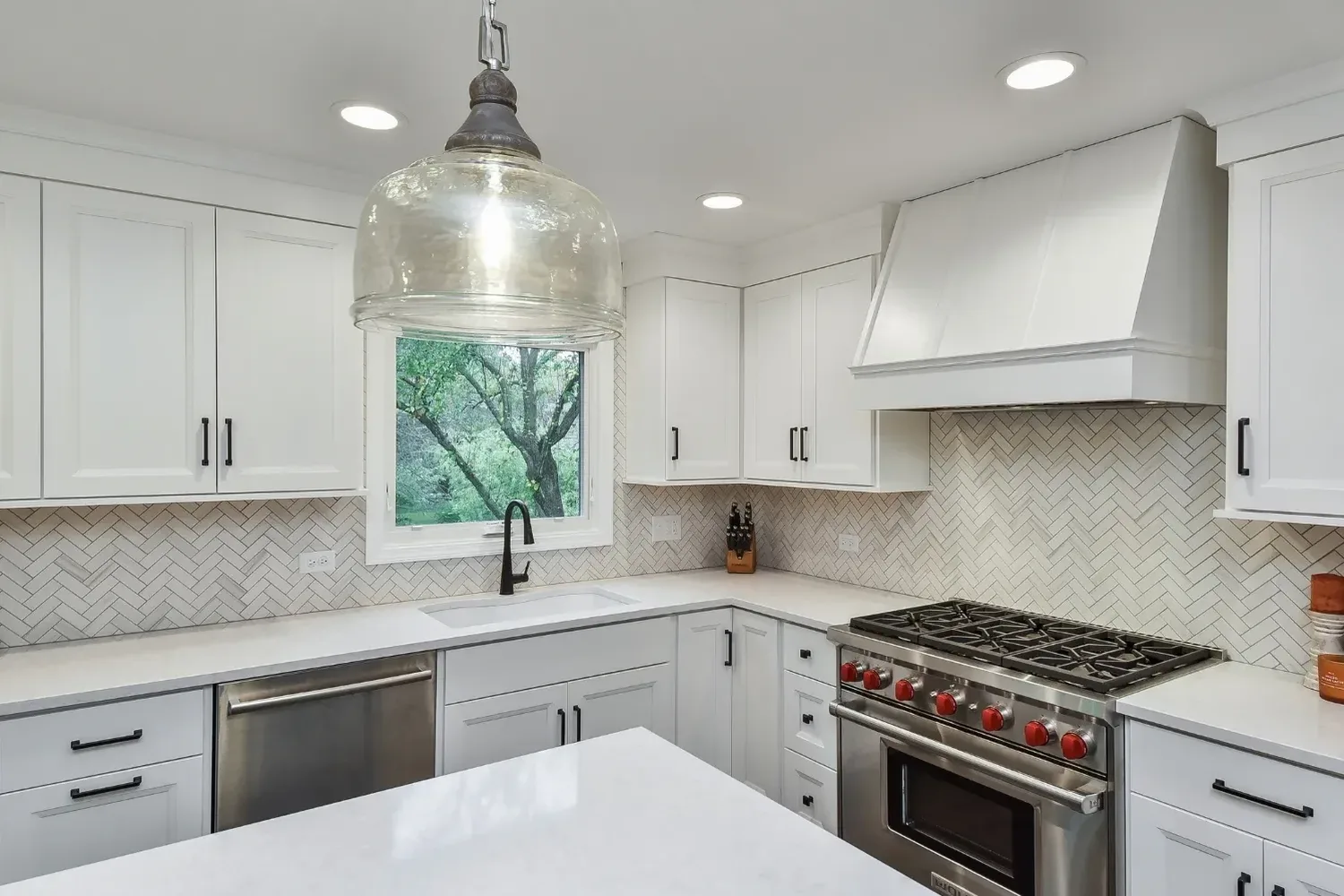
The photo at the top is our Clean & Transitional kitchen, built around a professional range with red knobs under a white paneled hood.
Gas vs induction cooktop vs electric range, side by side
All three cook well. They differ in how they make heat, what they need behind the wall, and which pans they accept.
Induction is a cooktop technology in which a coil under the glass creates a magnetic field that heats the pan itself. A radiant electric range is a smooth-top range that heats elements under the glass, and the hot glass then heats the pan.
| Gas | Induction | Electric (radiant) | |
|---|---|---|---|
| How it heats | Open flame under the pan | Magnetic field heats the pan | Hot element under smooth glass |
| Heat-up and control | Visible flame, quick to adjust | Fastest heat-up, most precise control | Slower to heat and adjust than induction |
| Cookware | Any | Pans a magnet sticks to | Any flat-bottomed pan |
| Utility needed | Gas line; most also plug into a standard outlet | Dedicated 240-volt circuit | Dedicated 240-volt circuit |
| Cleanup | Grates and burner caps | Flat glass, less splatter and burning | Flat glass, easier to wipe than gas grates |
| Indoor air | Combustion byproducts; vent outdoors | No combustion | No combustion |
ENERGY STAR reports that induction cooktops transfer energy "with approximately 85% efficiency," against about 32% for conventional gas and 75% to 80% for conventional electric resistance tops (ENERGY STAR, Residential Induction Cooking Tops). By the same page's math, induction is about 3 times more efficient than gas and 5 to 10 percent more efficient than electric resistance.

Speed follows the efficiency. ENERGY STAR's 2024 consumer guidance says induction brings "quicker heat up times and better precision temperature control over cooking with gas, radiant, or coil," and that "boiling water with induction can take nearly half the time" (ENERGY STAR, Electric Cooking Products 2024 Key Messages).
Gas: the open flame many cooks still want
A gas range gives you a visible flame and quick control, and it works with every pan you own. For cooks who sear, toast tortillas over the burner or use a round-bottom wok, nothing else feels the same.
What it asks of you. A gas line to the range location, and most gas ranges also plug into a standard outlet for the igniters and controls. It also needs real ventilation. Plan the hood with the range; our range hood guide covers sizing, venting and makeup air.
Who it suits. Households that already have gas in the kitchen and cooks who rely on open-flame techniques.
What the research says about gas stoves and indoor air
Burning gas or propane in the kitchen adds pollutants to the air inside the house. A range hood vented outdoors reduces them, but research shows it does not always clear them.
The EPA lists "unvented combustion appliances, e.g. gas stoves" among indoor sources of nitrogen dioxide (NO2). Its advice: "Install and use an exhaust fan vented to outdoors over gas stoves" (EPA).
Two Stanford-led studies put numbers on it:
- Nitrogen dioxide (2024). Writing in Science Advances, Kashtan and colleagues estimated that gas and propane stoves raise long-term NO2 exposure by 4.0 parts per billion on average across the United States. They tied that exposure to about 50,000 cases of current childhood asthma, and found exposure ran higher in smaller homes (Kashtan et al. 2024).
- Benzene (2023). Across 87 homes in California and Colorado, gas and propane burners emitted benzene at rates 10 to 25 times higher than electric coil and radiant cooktops. The researchers also report that "neither induction stoves nor the food being cooked emitted detectable benzene." Burner use could push bedroom benzene "above chronic health benchmarks for hours after the stove was turned off" (Kashtan et al. 2023).
The benzene paper adds a caution about hoods: "residential range hoods are not always effective at reducing pollutant concentrations, even if they vent outdoors" (full text, PMC10324305).
Our read of these studies: if you keep gas, a hood vented outdoors is the minimum, and it only helps when it runs. If someone in the house has asthma, or the kitchen sits in a small, open floor plan, the air-quality evidence leans toward induction.
Induction: fast, efficient and easy to wipe down
Induction heats the pan, so ENERGY STAR notes the cooking surface "will not be hot to the touch without a pot or pan in place." Because more of the energy goes into the food, less heat escapes into the room, which "can help keep kitchen temperatures lower compared to gas or standard electric cooking products" (ENERGY STAR 2024). The glass under a hot pan still warms up from the pan itself.
What it asks of you. Compatible cookware. ENERGY STAR names cast iron, stainless steel and enameled cast iron, and gives a simple test: "If the magnet sticks to the cookware, it will work with induction." By that test, a pan a magnet will not grip, such as plain aluminum, copper or glass, will not work unless it has a magnetic base.
Induction also needs a dedicated circuit. A dedicated circuit is a circuit that serves one appliance, with its own breaker in the panel. For a range, that means 240 volts. The National Electrical Code (section 210.19(A)(3)) sets a 40-amp minimum branch circuit for ranges rated 8 3/4 kW or more. The installation manual for your exact model sets the breaker.
Who it suits. Households with young children, since ENERGY STAR says heating the cookware instead of the surface cuts burn risks. It also suits anyone who wants a cooler kitchen in summer, and cooks who want precise control without combustion in the house.
Induction vs electric range: radiant electric is the budget pick
A radiant electric range is usually the least expensive of the three to buy. It needs no special cookware, and ENERGY STAR says electric cooktops are "much easier to wipe down and clean compared to gas ranges."
What it asks of you. Patience. Compared with induction, a radiant top heats up more slowly and gives less precise control, and a boil-over can bake onto hot glass. It runs on the same kind of 240-volt circuit as induction, which can make a later switch simpler as long as the circuit matches the new range's manual.
If you go electric, look for the ENERGY STAR label. ENERGY STAR says certified electric cooking products are 18% more efficient, on average, than standard electric models (ENERGY STAR 2024).
Who it suits. Rental-ready kitchens, tight budgets, and cooks who rarely need fast heat changes.
Federal rebates for an induction range
The federal Home Energy Rebates program can pay toward an electric range and the electrical work behind it, but only for income-qualified households, and only once a state opens its program. The U.S. Department of Energy lists these caps (DOE Home Energy Rebates FAQ, December 2024):
- $840 for an ENERGY STAR-certified electric stove, cooktop, range or oven
- $4,000 for an electrical panel
- $2,500 for electrical wiring
- Up to $14,000 per household in total

The DOE says the program covers up to 100% of costs for lower-income families and up to 50% for moderate-income families. Only households earning less than 150% of their area median income may qualify. States run the programs, and the DOE "strongly recommends waiting until your state's rebate programs launch before beginning your projects."
Availability and application steps vary by state, so check your state energy office for current status before you buy. In our service area, that means the Ohio Department of Development, Kentucky's Home Energy Rebates site or the Indiana Office of Energy Development.
Our read of the caps: for a gas-to-induction switch, the panel and wiring caps add up to $6,500, far more than the $840 for the range. In an older house, the electrical work is also where a switch gets expensive, as the next section explains.
Why the range comes before the cabinet order
The cabinet drawings start from the appliances. Change the range after the order and the boxes may not fit. Four range decisions feed the cabinet plan:
- Width. ENERGY STAR notes that most cooking tops fall within 30 to 36 inches wide. A 30-inch range, a 36-inch range and a 48-inch professional range each need a different opening and different filler cabinets beside it.
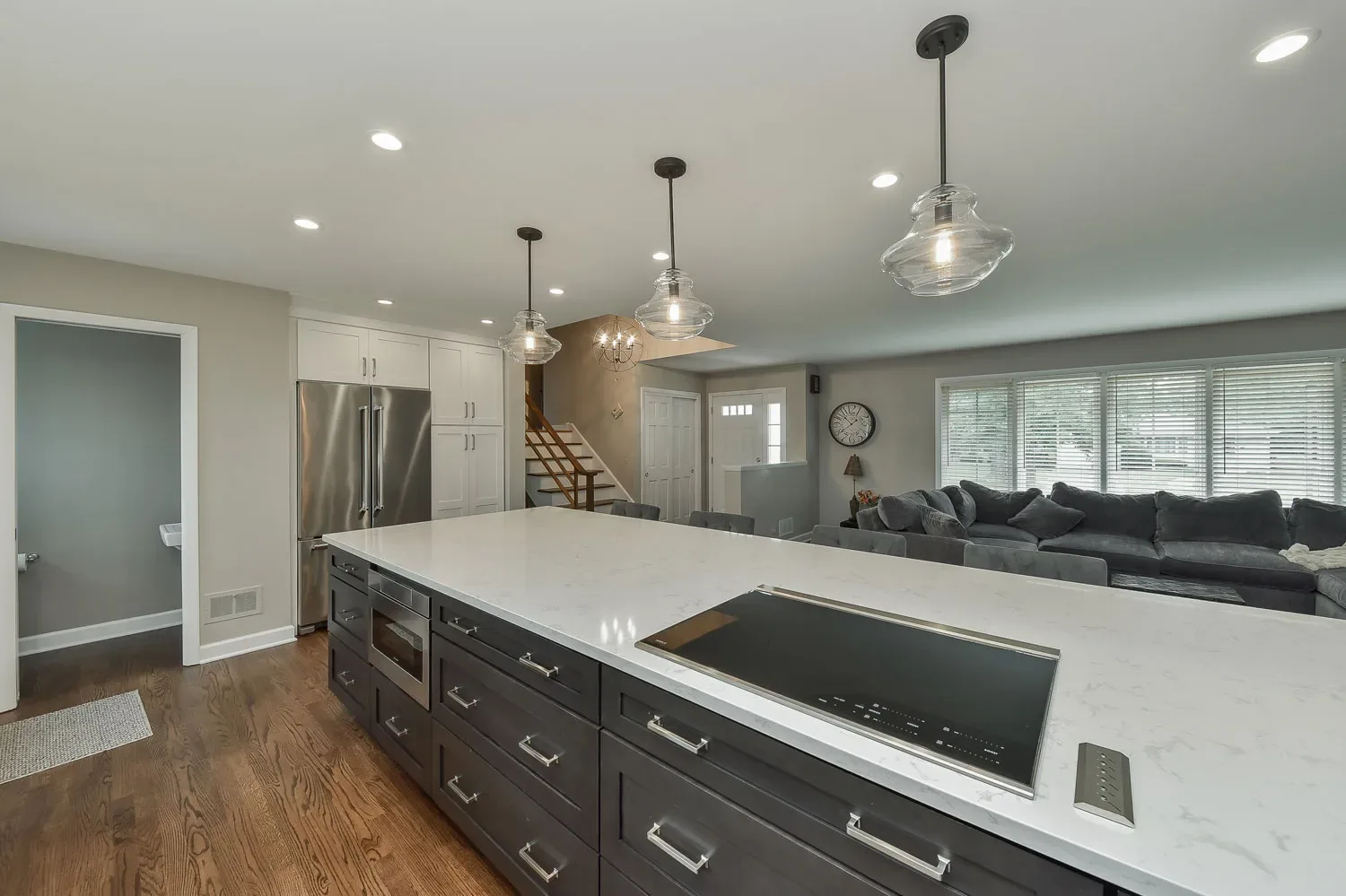
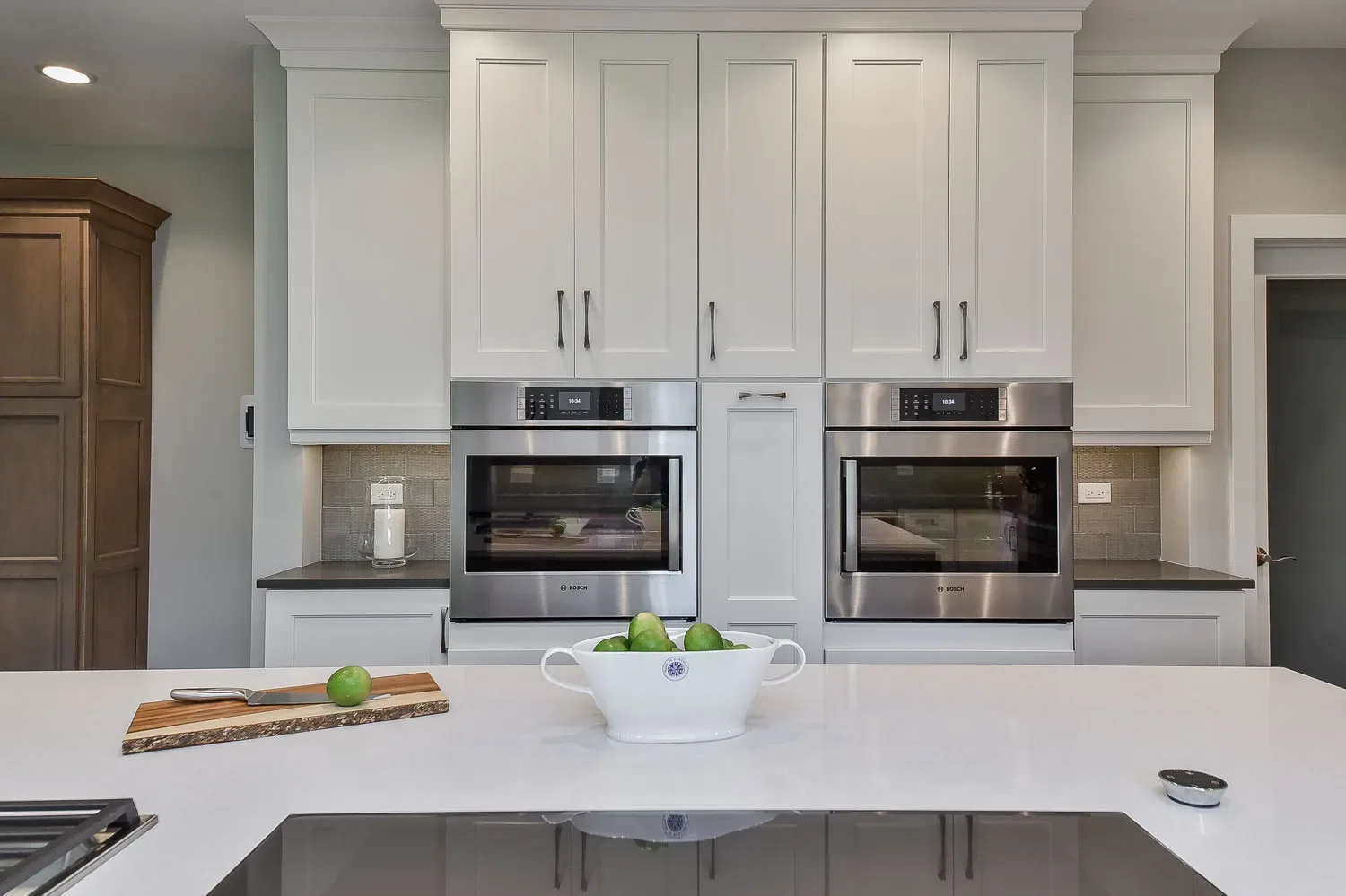
- Range or cooktop and wall ovens. A cooktop in the island with ovens in a tall cabinet changes the island, the tall cabinet run and the hood plan.
- The hood. The hood and the cabinet above it change with the cooking surface. Clearances above the cooktop and the depth of any cabinet over it come from the range's installation instructions, and the range hood guide linked above covers hood sizing.
- The utility. A switch from gas to induction means capping the gas line and running a new 240-volt circuit, possibly with a panel upgrade. A switch from electric to gas means a new gas line.
Location matters too. If the current layout works, keeping the range where it is saves real money, because moving plumbing, gas and venting adds trades and inspections. Changes to electrical, plumbing or gas typically need a permit, and we handle the applications and inspection visits.
The utility point matters most in older Cincinnati homes, and our older-home kitchen page explains how we handle it. On those kitchens, we check the panel, wiring, plumbing, subfloor and walls before anything is priced. We put the range, refrigerator, dishwasher, microwave and disposal on their own circuits. If a panel is 100 amps or smaller, or still has fuses, we typically recommend an upgrade. Panel upgrades and a sub-panel run typically add $2,500 to $6,000, depending on how much rewiring the rest of the house needs.
During design, the field measure, cabinet layout, electrical plan and material selections happen together, so we plan the range into the cabinet layout at that stage. Every material is staged before demo day.
Which range fits your kitchen
- You cook with a wok, char over a flame, or already have gas: gas, with a hood vented outside.
- You want speed, efficiency and no combustion indoors: induction, plus pans a magnet sticks to.
- You want a lower price and easy cleaning: standard electric, on a circuit sized to its manual.
- You bake a lot and want ovens at eye level: a cooktop with wall ovens in a tall cabinet, planned into the cabinet layout from the start.
Storage near the cooktop changes with the choice too. Wide drawers for pots fit under a cooktop, while a range uses that space for its own oven. Our kitchen storage guide covers drawer and pull-out options.
Where the range fits in a Bulldog kitchen budget
Appliances sit with lighting, faucets, hardware and tile as the selections where personal taste moves the number the most. In our Signature Remodel ($55K to $85K), the package includes appliance install for gas or electric and a new range hood. Our Luxury Build ($85K to $120K+) includes a pro-grade appliance package (Wolf, Sub-Zero, Thermador) and a custom range hood. Full package details are on our Cincinnati kitchen remodel cost guide, and the kitchen remodel planning guide walks through the order of decisions from design to install.
Frequently asked questions
Is induction better than gas?
By ENERGY STAR's figures it is far more efficient (about 85% against about 32%) and faster to heat, and it burns nothing inside the house. Gas still suits open-flame cooking and works with any pan.
Do I need new pots for induction?
Only if a magnet will not stick to the bottom of the ones you have. Cast iron, enameled cast iron and magnetic stainless steel work. Plain aluminum, copper and glass need a magnetic base.
Can I switch from gas to induction during a remodel?
Yes. The gas line gets capped, and an electrician runs a dedicated 240-volt circuit sized to the range's installation manual. The panel needs room for that circuit. In older homes, we check panel capacity before anything is priced.
Do induction ranges need a range hood?
We recommend one. Induction burns no fuel, so it adds no combustion byproducts, but cooking still throws off grease, smoke and moisture, and a hood vented outside clears them. With gas, the hood matters more, and the 2023 benzene study found hoods are not always effective even when they vent outdoors.
Is there a rebate for an induction range in Ohio or Kentucky?
A federal program allows up to $840 toward an ENERGY STAR electric or induction range for income-qualified households (under 150% of area median income). States run the program, so check your state energy office for current availability before you buy: the Ohio Department of Development, Kentucky's energyrebates.ky.gov or the Indiana Office of Energy Development.
Plan your range and cabinets together
Book a 15-minute consultation to talk through scope, budget and timing. If we're a good fit, we'll schedule an in-home estimate and quote the kitchen line by line. You can also browse our kitchen remodels or call us at (513) 657-3750.
Sources
- ENERGY STAR. 2021-2022 Residential Induction Cooking Tops. Emerging Technology Award page; criteria file dated June 23, 2022.
- ENERGY STAR. Electric Cooking Products 2024 Key Messages. October 2024.
- U.S. Environmental Protection Agency. Nitrogen Dioxide's Impact on Indoor Air Quality. Last updated April 29, 2026.
- Kashtan, Y., et al. Nitrogen dioxide exposure, health outcomes, and associated demographic disparities due to gas and propane combustion by U.S. stoves. Science Advances 10(18), May 3, 2024.
- Kashtan, Y., et al. Gas and Propane Combustion from Stoves Emits Benzene and Increases Indoor Air Pollution. Environmental Science & Technology 57(26), June 15, 2023. Full text: PMC10324305.
- U.S. Department of Energy. Home Energy Rebates Frequently Asked Questions. December 2024.
- Commonwealth of Kentucky. Kentucky Home Energy Rebates.