
Key Takeaways
- Cincinnati allows one ADU on a qualifying single-family lot, attached, detached or built inside the existing house, under Section 1421-06 of the Zoning Code.
- The owner or a designated responsible person must live in the main house or the ADU for as long as the ADU exists, backed by a recorded covenant and a registration renewed by December 31 of every odd-numbered year.
- An ADU can't be larger than the finished square footage of the main house. On lots of 4,000 square feet or more, a new detached ADU's footprint is capped at 800 square feet or 15% of the lot, whichever is greater, and its height at 25 feet.
- ADUs need no off-street parking, need their own exterior entrance and may be short-term rentals under the city's rental rules.
- Suburbs, townships and Northern Kentucky cities write their own rules, so check with the zoning office for your address.
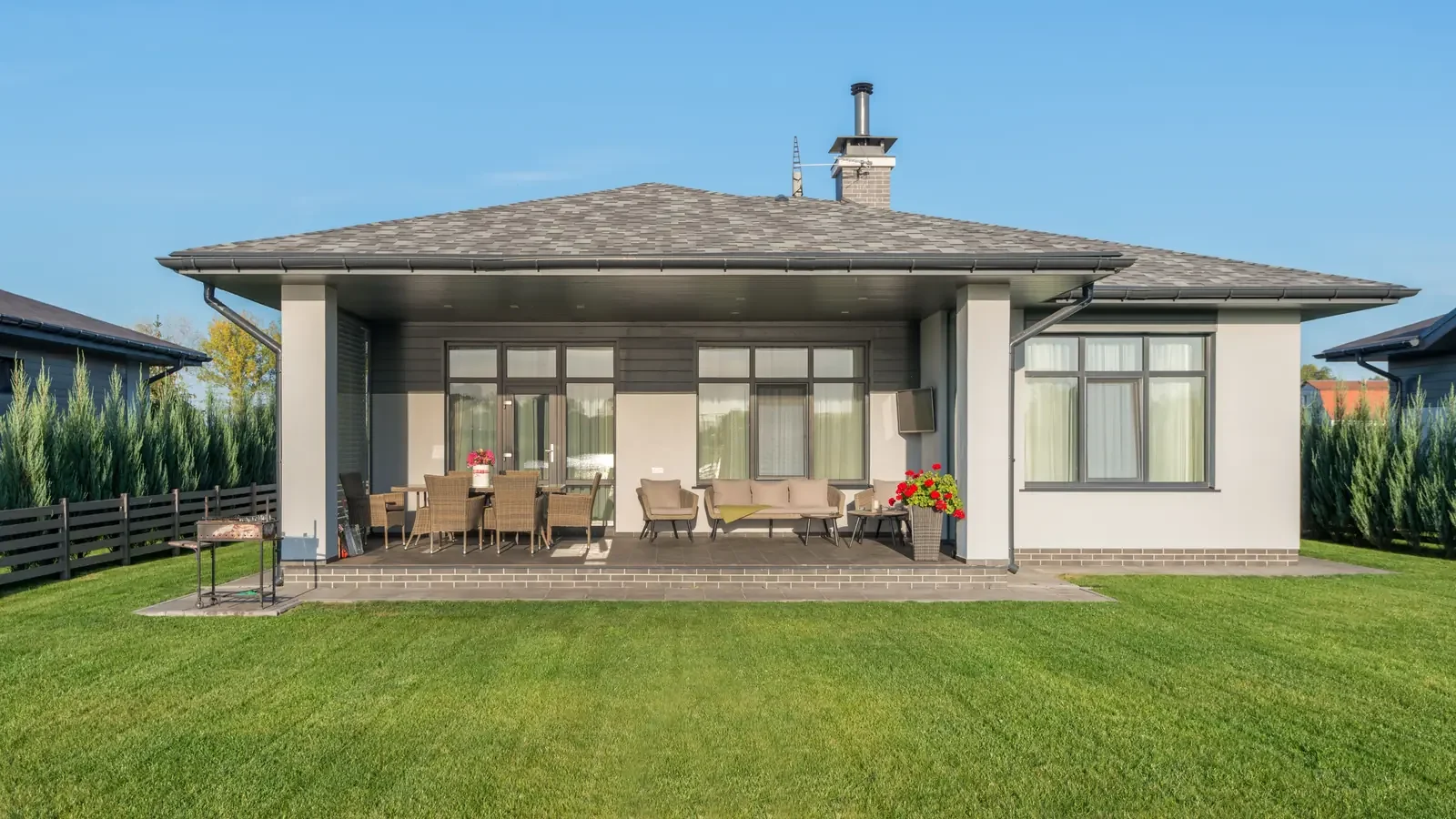
Yes, you can build an accessory dwelling unit (ADU) in the City of Cincinnati. Since October 2, 2023, the city's zoning code has allowed one ADU on a lot with a single-family home that meets the lot-size rules: inside the house, as an addition, or as a separate building in the backyard. The catch is the paperwork. The owner, or a person the owner designates, has to live in the house or the ADU. That promise goes into a recorded covenant, and the unit has to be registered with the city and re-registered every two years. These rules apply inside Cincinnati city limits only.
When did Cincinnati legalize ADUs?
Cincinnati City Council passed Ordinance 266-2023 in June 2023, adding Section 1421-06, "Accessory Dwelling Units," to the Zoning Code (City of Cincinnati Legistar, File 202301802). WVXU reported that the vote was 8-0 and that the rules took effect October 2, 2023 (WVXU, June 21, 2023).
The code allows an ADU "within the building envelope of a single-family dwelling, as an addition to a single-family dwelling, or as a detached structure on the same lot as a single-family dwelling, provided that no more than one accessory dwelling unit may be established on a single lot" (Section 1421-06(a)). In practice that covers a basement or attic apartment, a converted garage, an addition with its own door, or a small house behind the main one.
The lot also has to meet the minimum lot size for single-family homes in its zoning district, or the alternative standard in Section 1421-09, whichever is less restrictive (Section 1421-06(c)). A lot can hold no more than two accessory buildings of any kind, and a detached ADU counts as one of them (Section 1421-06(e)). If you already have a detached garage and a shed and want a detached ADU, one of them has to go or become the ADU.
Who has to live on the property?
The owner, or a responsible person the owner names. The code requires the owner to "maintain a residence in the principal single-family dwelling or the accessory dwelling unit on the lot for so long as the accessory dwelling unit exists," or to designate a responsible person who lives there instead (Section 1421-06(l)(1)).
Both terms are defined. A residence is your "true, fixed, and permanent home," and a person can have only one inside city limits at a time. A responsible person is "a natural person designated by the owner" with the "independent duty, responsibility (including financial responsibility), and authority to operate, maintain, and manage the lot and all the dwelling units thereon" (Section 1421-06(l)(4)). A company can't fill that role, and neither can someone who lives elsewhere.
To keep the rule in force, the owner must (Section 1421-06(l)(2)):
- Record a covenant, in a form the City Solicitor accepts, promising that the owner or responsible person will live on the property for as long as the ADU exists.
- Register the ADU with the Zoning Administrator and verify the occupancy rule when the unit is established.
- Renew the registration by December 31 of every odd-numbered year after the first year.
- Update the registration whenever ownership of the property or the designated responsible person changes.
Breaking the occupancy rule is a Class F civil offense (Section 1421-06(l)(3)). WVXU reported the penalty at $15,000.
Because the covenant is recorded against the property, expect it to matter when you sell. Tell your real estate agent about the ADU early.
How big can an ADU be?
Two limits apply, and the stricter one wins.
Total size. "The square footage of an accessory dwelling unit may not exceed the square footage (excluding unfinished spaces) of the principal single-family dwelling" (Section 1421-06(g)). A 1,200-square-foot house can have an ADU of up to 1,200 square feet. Unfinished basements and attics in the main house don't count toward that number.
Footprint of a detached ADU. On a lot of 4,000 square feet or more, a detached ADU's footprint can cover no more than "15% of the total lot area or 800 square feet, whichever is greater" (Section 1421-06(d)). On a lot under 4,000 square feet, the house and the ADU together can't cover more than 60% of the lot or 800 square feet, whichever is greater.
Some quick math for lots of 4,000 square feet or more:
| Lot size | 15% of the lot | Largest detached footprint |
|---|---|---|
| 4,000 sq ft | 600 sq ft | 800 sq ft |
| 5,000 sq ft | 750 sq ft | 800 sq ft |
| 6,000 sq ft | 900 sq ft | 900 sq ft |
| 8,000 sq ft | 1,200 sq ft | 1,200 sq ft |
Footprint is the ground the building covers, so a two-story detached ADU can hold more floor area than its footprint, up to the size of the main house.
There is one exception. Converting a garage or other accessory building that already exists is allowed even if it exceeds these coverage limits, as long as you don't expand its footprint (Section 1421-06(d), Exception).
Setbacks, height and the front yard
Where the ADU goes on the lot depends on how you build it (Section 1421-06(f) and (h)):
- Inside the house or in an existing garage. No setback rules apply, as long as the footprint stays the same.
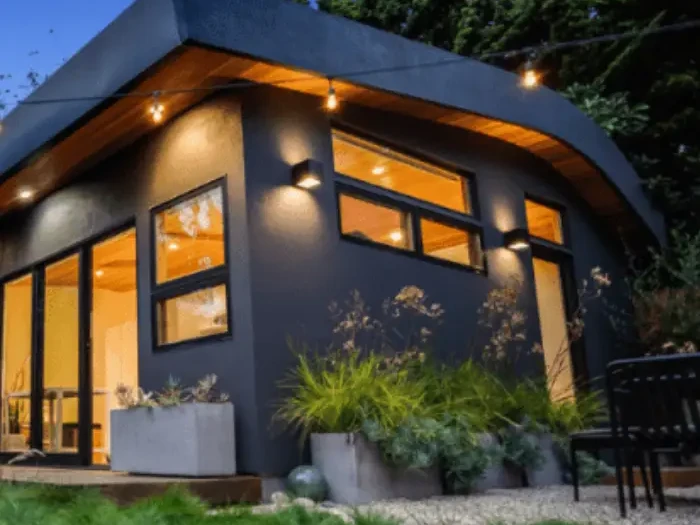
- Detached and new. It must meet the side and rear setbacks for accessory buildings in your zoning district, and it can't sit in the front yard. It can be up to 25 feet tall.
- An addition to the house. It must meet the same setbacks and height limits as the house itself.
- A converted garage. It can be 25 feet tall or as tall as the existing building, whichever is greater.
Setback distances vary by zoning district, so we confirm them for your lot before any drawings start.
Parking, entrances and utilities
Parking. ADUs are exempt from the city's off-street parking requirements (Section 1421-06(j)). You don't need to pave a new space for the unit.
Entrance. "Each accessory dwelling unit must provide a separate exterior entrance independent of the entrance to the single-family dwelling" (Section 1421-06(b)). A basement apartment reached only through the main kitchen does not qualify. Plan for an outside door.
Construction and utilities. A detached ADU "must be of permanent construction and must contain permanent utility hookups. Mobile tiny homes and recreational vehicles are not permitted as accessory dwelling units" (Section 1421-06(i)). In practice that means a foundation and permanent utility service, not a trailer hookup.
Can you rent out an ADU in Cincinnati?
Yes, with a condition. Because the owner or responsible person must live in one of the two units, you can rent the other. The code also lets an ADU "be operated as a short-term rental in accordance with the provisions of Chapter 856, Short Term Rentals" (Section 1421-06(k)). Either way, the city's process guide says a rented ADU has to be registered as a rental.
Rental income is one of four reasons families give us for building an ADU. The others are housing an aging parent, giving an adult child a place of their own, and adding a guest suite or home office.
How the permit process works
The city's ADU Step-by-Step Process Guide groups the work under four headings: Pre-Work, Development, Occupancy and Covenant, and Rental (if you plan to rent). In order:
- Check the site. Call the city's Zoning Information office at (513) 352-2430 about the rules for your lot. Submit the free sewer availability request to the Metropolitan Sewer District and the free water availability request to Greater Cincinnati Water Works.
- Prepare a site plan. The guide says to hire a design professional for it. If you are converting existing space, it suggests the city's Commercial Courtesy Inspection Program.
- Get an address for the new unit from the Department of Transportation and Engineering. The guide warns that skipping this step before applying for building permits may delay your permit.
- File the zoning paperwork. Fill out the ADU Owner Acknowledgement Form and register the ADU with the Zoning Administrator through the ADU Registration Portal.
- Apply for building permits with the Department of Buildings and Inspections, then build.
- Record the covenant. Fill out the city's draft occupancy covenant without signing it and email it to the Zoning Division. Once the Zoning Division and the City Solicitor's Office approve it, you sign it and record it with the Hamilton County Recorder, then give the Zoning Division a stamped copy. The guide says you will not receive a Certificate of Occupancy until the covenant is approved and recorded.
- Register any rental. A long-term rental is registered through Buildings and Inspections' Residential Rental Registration. A short-term rental goes through the city's short-term rental portal.
After that, renew the ADU registration by December 31 of every odd-numbered year.
Forms and portals change, so check the current steps on the City of Cincinnati ADU page before you file.
What if you live outside Cincinnati city limits?
These rules cover the City of Cincinnati only. Hamilton County townships, suburbs such as Blue Ash, Mason or Loveland, and Northern Kentucky cities such as Covington, Fort Thomas and Florence set their own zoning. Some allow ADUs and some don't, and their size, occupancy and parking rules differ. Call your city or township zoning office with your address before you plan anything.
How Bulldog handles an ADU project
Every ADU we build starts with a zoning review of your lot, before you pay for design. We confirm what your municipality allows, pull the permits, coordinate inspections, and handle the City of Cincinnati registration as part of the job. Our in-house designer plans the layout with 3D renderings. Our own crews then build the kitchen, bathroom, utilities and finishes under one fixed-price contract.
Bulldog ADUs typically run $50,000 to $120,000 for a basement conversion, $80,000 to $175,000 for a garage conversion, and $120,000 to $230,000 for a detached backyard unit, for units of 300 to 800 square feet. An ADU takes longer than a kitchen or bath because it adds permitting and, for detached units, foundation and framing. We give you a realistic schedule in writing once zoning and design are settled. Every ADU carries our lifetime workmanship warranty, and our financing options are on the site.
Frequently asked questions
Can I add an ADU to a duplex lot?
No. Section 1421-06 allows ADUs only on the same lot as a single-family dwelling. A lot that already has a two-family or multi-family building doesn't qualify.
Can I put a tiny house on wheels in the backyard?
No. The code says mobile tiny homes and recreational vehicles are not permitted as ADUs. A detached ADU must be permanent construction with permanent utility hookups.
Can my adult child be the responsible person?
Possibly. The responsible person must be a real person, not a company, whom the owner designates. They must live in the main house or the ADU, and they take on responsibility, including financial responsibility, for managing the lot and both units. Ask the Zoning Division how to name them on the registration.
Does my ADU need its own parking space?
No. ADUs are exempt from the city's off-street parking requirements.
Do I have to live on the property forever?
The owner or a responsible person has to live there for as long as the ADU exists, and the recorded covenant can't be removed without the Zoning Administrator's written consent.
Talk to us about your lot
Book an in-home consultation and we will look at your lot, your zoning and the kind of ADU you have in mind, then give you a fixed price in writing. You can also send us a message or call at (513) 657-3750.
Sources
- City of Cincinnati, Ordinance No. 266-2023, enacting Zoning Code Section 1421-06, "Accessory Dwelling Units." Legistar File 202301802, passed June 26, 2023. Quotes are from the ordinance text.
- WVXU, "Council approves 'accessory dwelling units' to allow more housing in single-family zones." WVXU.org, June 21, 2023.
- City of Cincinnati Department of City Planning and Engagement. Accessory Dwelling Units and ADU Step-by-Step Process Guide (PDF), read from the Internet Archive copy dated August 20, 2026. Process steps can change; confirm with the city before filing.